Wo Skulpturen und Bilder Geschichten erzählen
Der Verein LANDKUNSTSTÜCK e.V. setzt mit Skulpturen und Videoinstallationen künstlerische Akzente auf den Bauernhöfen im OstseeFerienLand
Die Kulturlandschaft Ostholsteins wird seit vielen Jahrhunderten durch die Landwirtschaft geprägt. Und sie verändert sich – durch den globalen Wettbewerbsdruck, den Anstieg der Weltbevölkerung und immer neue Technologien. Wie also werden wir uns in Zukunft ernähren? Vor welchen Herausforderungen stehen die Menschen, die unsere Ernährung sicherstellen? Welche Chancen haben landwirtschaftliche Familienbetriebe, sich in einem globalisierten Markt zu behaupten? Was wollen Verbraucher und was können Bauern leisten? Antworten darauf findet man leichter im direkten Dialog zwischen Verbrauchern und Landwirten. Genau dazu möchte LANDKUNSTSTÜCK e.V. durch sein Projekt im OstseeFerienLand einladen.
So entstehen die LANDKUNSTSTÜCKE im Auftrag des gleichnamigen Vereins im ebenfalls engen Austausch zwischen Künstlern und Landwirten – eine einzigartige Form der Zusammenarbeit im Bereich der Kunst, die weiter gedeihen soll. Auf umweltfreundliche Art und Weise kann man alle LANDKUNSTSTÜCKE auf einer Radtour entdecken. Es gibt zwei Routen, die Ost-Route und West-Route, sodass kein LANDKUNSTSTÜCK doppelt angefahren wird. Die Touren sind durchgehend ausgeschildert, sodass ihr euch auch ohne Radkarte ganz bequem auf den Weg begeben könnt. Worauf wartet ihr also noch? :-)
"Balance"
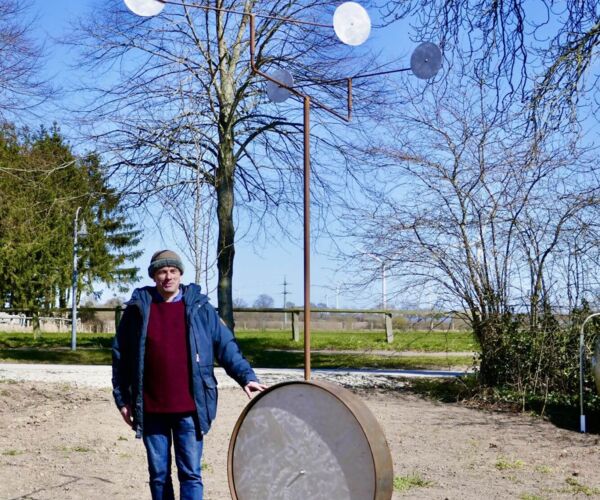
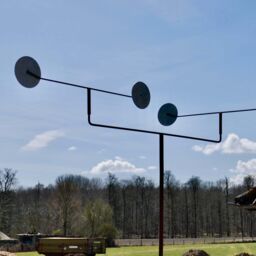
Eine sensible Metallkonstruktion, die voller Bewegung steckt: Anschaulicher als die Installation „Balance“ vor dem Hofensemble Manhagenerfelde 13 kann ein Kunstwerk zum Thema Landwirtschaft kaum sein. Die Arbeit des Künstlers Arne Prohn aus Nordfriesland trägt den treffenden Namen „Balance“, denn sie symbolisiert die Balance auf dem Einrad, die im Einklang mit der Natur, dem Menschen und der Wirtschaftlichkeit das Gleichgewicht auslotet. Das Kunstwerk steht in Sichtweite an der Straße und ist zugänglich.
Standort: Steensens Bauernhof, Manhagenerfelde 13, 23738 Manhagen, direkt auf dem Hof
„Stein wie eine Landschaft“
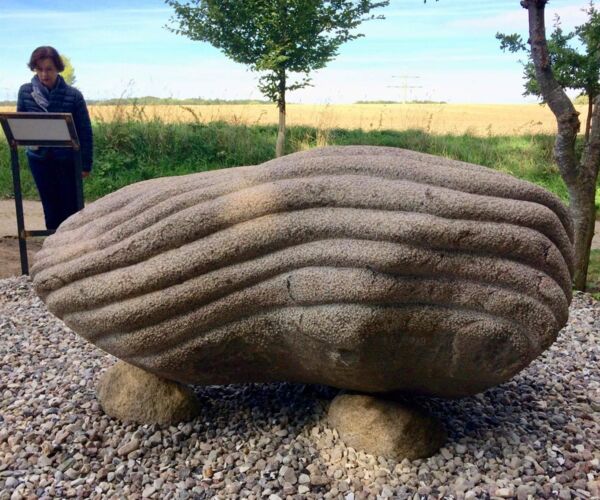
Ein aus Skandinavien mit der Eiszeit bis Schleswig-Holstein gewanderter Granitfindling, bearbeitet von Ulrich Lindow (Schobüll) für den Hof Dammer (Kattenberg bei Cismar). Der nahezu meditativ anmutende Stein spiegelt mit seiner welligen Gestalt und den geschwungenen Furchen die landwirtschaftliche Arbeit in der hügeligen Endmoränenlandschaft rund um den Kattenberg wieder.
Standort: Hof Dammer, Kattenberg 8, 23743 Grömitz-Cismar in Hofnähe am Kattenberger Weg
„Splitter“, Silo
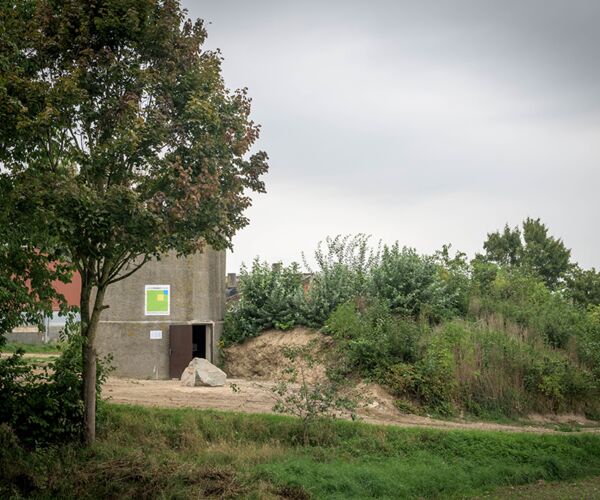
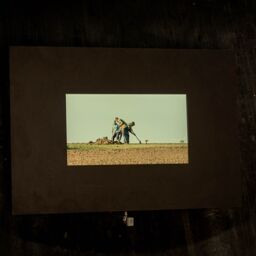
Ein Video des Filmemachers und Fotografen Jobst von Berg (Böel) für den Hof Körnick (bei Grömitz). Mit diesem Video werden Klischees überprüft, in Frage gestellt und neu besehen. Von Bergs Kamera folgt der landwirtschaftlichen Arbeit durch das Jahr – sie zeichnet die Strukturen und Spuren der Arbeit, der Lebens- und Wachstumsprozesse nach. Kommentierend oder auch dialoghaft wechseln sich Bilder und Texteinschübe ab. Durch eine subtile Bedeutungsverschiebung zwischen Wort und Bild eröffnet die Videoarbeit die Möglichkeit eines Blickwechsels auf bis dahin nur scheinbar Wohlbekanntes innerhalb dieser uralten und doch so ultramodernen Wirtschaftsform: der Landwirtschaft.
Standort: Meier, Körnick 1, 23743 Grömitz auf dem Hof
„Stammgäste"
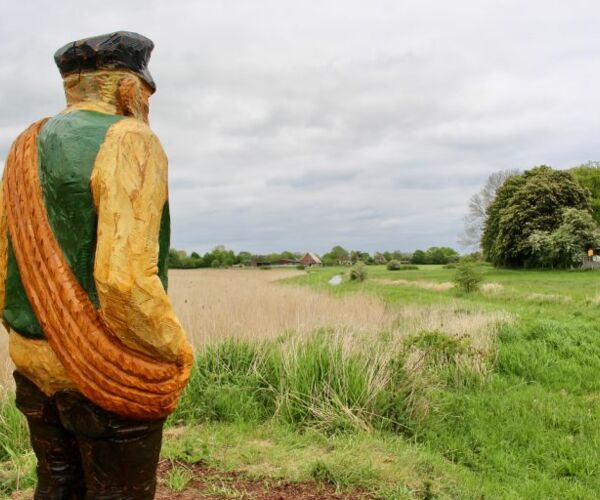
Zwischen Oldenburg in Holstein und der Gemeinde Grube lag früher der drittgrößte Flachsee Schleswig-Holsteins. Durch den Sandeintrag der nahen Ostsee verlandete er immer mehr und wurde nach und nach trockengelegt, um Flächen für die Landwirtschaft zu gewinnen.
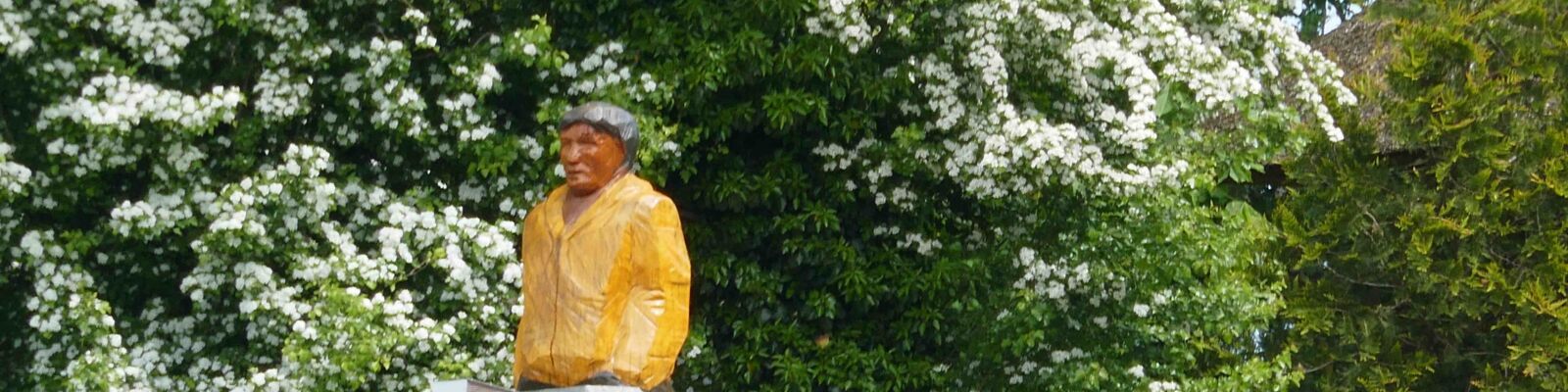
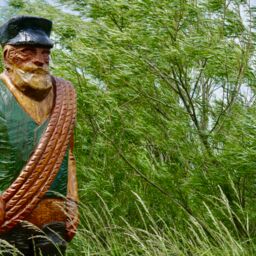
Der Flensburger Bildhauer Johannes Caspersen erinnert mit seinen „Stammgästen“ am Paasch-Eyler-Platz an die Geschichte des Sees. Das Relikt der letzten Eiszeit war reich an Fischen und ernährte etliche Familien. Dafür steht der „Fischer“ auf dem Feld beim Siel – zuzeiten des Gruber Sees war dort sein Arbeitsgebiet. Der „Reisende“ schaut von der Aussichtsplattform auf dem Gelände der Alten Gruber Bürgergilde in die Landschaft – und auch auf den „Fischer“. Die Figuren werden so zum Sinnbild für die ursprünglich natürliche Umgebung und die späteren Eingriffe durch den Menschen.
Standort: Paasch-Eyler-Platz, 23749 Grube
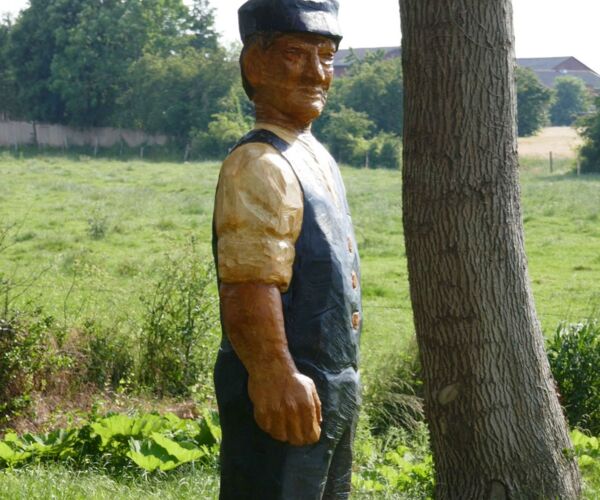
„Landarbeiter“
Ein weiterer „Stammgast“ steht auf der Wiese am Dunker’schen Platz in Grube – der „Landarbeiter“, der den Gutsbesitzern zu ihrem Reichtum verhalf. Der Dunker’sche Platz wurde im 18. Jahrhundert prachtvoll bebaut. Bis Ende 1840 residierte hier der Hausvogt des damals königlichen Amtshauses in Cismar, dem nebst Dienstwohnung ca. 20 Tonnen Land zustanden. Nach altem Brauch erhielt er von seinen Untertanen zu seinem Gehalt sechs Faden Brennholz und sechs Fuder Torf.
Standort: Dunker'scher Platz, 23749 Grube
„Baum – Mensch – Baum“
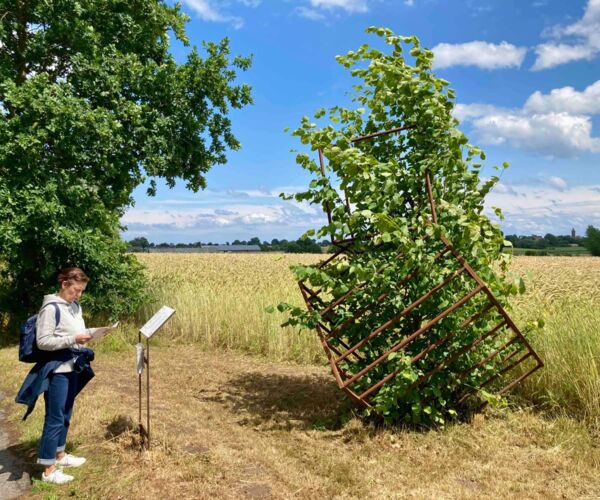
Zwischen Dahme und Kellenhusen steht eine Eiseninstallation mit Winterlinde. Sie lässt sich als Sinnbild für den heutigen Umgang des Menschen mit der Natur verstehen: „Überall wird die Natur auf verschiedene Weise begrenzt“, so die Künstlerin Margit Huch. „Es ist erwünscht, dass der Baum sein Gefängnis überwindet und es so bedeutungslos macht.“
Andererseits kann man „Baum – Mensch – Baum“ auch als Symbol für die Koexistenz von Mensch und Natur sehen: Je weiter der Abstand zwischen den Gitterstäben, desto mehr Raum für das Hindurchwachsen, für die natürliche Entwicklung des Baumes. Auf diese Koexistenz zielt die ökologische Landwirtschaft auf Hof Bokhorst, dem diese Skulptur gewidmet ist.
Standort: Axt/Bokhorst, 23746 Kellenhusen, Dahmer Weg/Vogelsang
„von bienen und blüten“
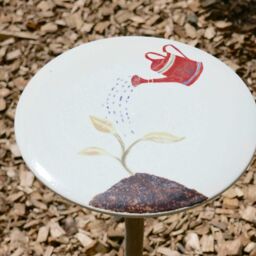
Bienen und andere Insekten sorgen für die Bestäubung von Pflanzen, die einen Großteil unserer Nahrung sicherstellen. Doch die wichtigen Nutztiere sind stark bedroht. Die Lyrikerin Doris Runge aus Cismar setzt mit ihrem exklusiv für LANDKUNSTSTÜCK entstandenen Gedicht „von bienen und blüten“ ein Zeichen und macht auf das fragile Gleichgewicht zwischen Natur und deren Nutzung aufmerksam.
Der bildende Künstler Hans-Joachim Mocka aus Kollund (Dänemark) hat für diese Zeilen auf dem Apfelhof Grimm in Cismar eine Gartenbühne geschaffen, die mit bewegten Formen bewegen möchte.
Standort: Grimm, Wintersberger Weg 3, 23743 Grömitz-Cismar auf dem Hof
„Bodenpunkte“
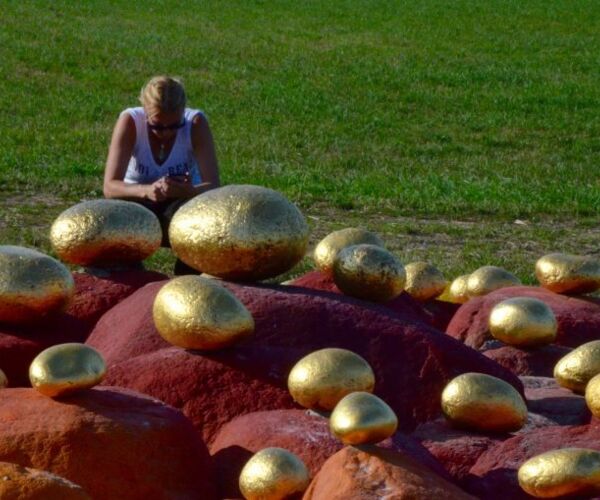
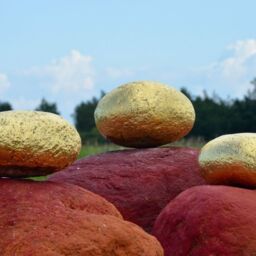
Die ackerbauliche Qualität einer Fläche wird in sogenannten „Bodenpunkten“ gemessen (Wertzahl: 1 = sehr schlecht, 100 = sehr gut). Die Salzwiesen des Reiterhofs Hopp am Langenredder in Grömitz-Lenste weisen einen durchschnittlichen Wert von 30 Bodenpunkten aus.
Die Künstlerin Sigrid Stegemann aus Oldersbek (Nordfriesland) hat mit ihrer Findlingsgruppe genau das thematisiert: Die 30 blattvergoldeten Steine auf den größeren, insgesamt 100 farbig bemalten Findlingen symbolisieren diese Wertzahl.
Standort: Hopp, Langenredder 48, 23743 Grömitz-Lenste Langenredder in Hofnähe
„Generationen-Allee“
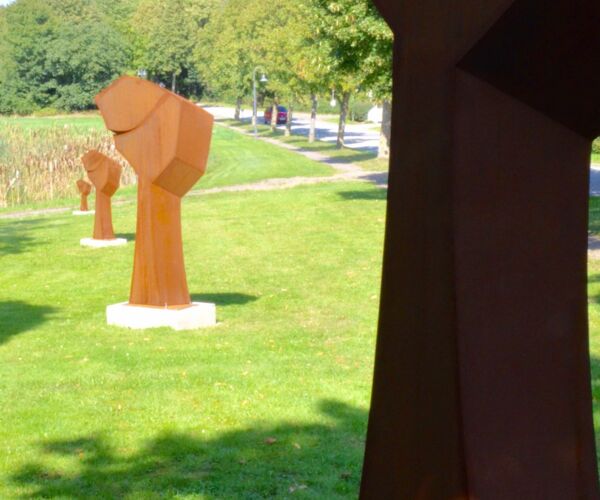
Alleen waren früher oft die direkte Verbindung zwischen Bauern und Kunden. Heute begegnen sich beide kaum mehr. Die vier rostigen Stahlbäume in Riepsdorf weisen einen neuen Weg zum Hof an der Hauptstraße 31 – und laden ein zum Dialog mit Bauer Carsten Siems.
Geschaffen hat die „Generationen-Allee“ der Lübecker Bildhauer Winni Schaak. Die leichte Neigung der Skulpturen symbolisiert die Last, die jede Bauerngeneration zu tragen hat – die Widrigkeiten der Natur, die Ansprüche von Gesellschaft und Industrie. Die unterschiedlichen Größen stehen für die Generationen, die ihr Bestes geben …
Standort: Siems, Hauptstr. 31, 23738 Riepsdorf Straßenseite vor dem Hof
„Schwimmknick“
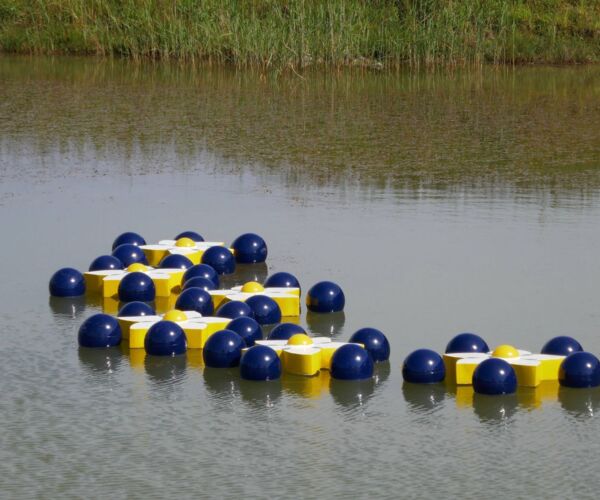
Die farbenfrohe Mixed-Media-Installation schwimmt auf einem kleinen, künstlich angelegten Teich bei Gut Rosenhof nördlich von Grube, Richtung Siggeneben rechts hinter dem Wald.
Die Künstlerin Inga Momsen erläutert: „Durch Ausgleichsflächen – zum Beispiel Knicks, künstliche Teiche und Wälder – tragen Landwirte zur Renaturierung ihrer Umgebung bei. Ich hole den Knick auf den Teich und verbinde zwei wichtige Renaturierungs-Maßnahmen miteinander.“ Zu Form und Farbgebung ihrer Arbeit inspirierten sie der Holunder als typische Knickpflanze wie auch das Wappen der Gemeinde Grube als Schauplatz der Installation.
Standort: Gut Rosenhof, 23749 Grube
„kreise kreise“
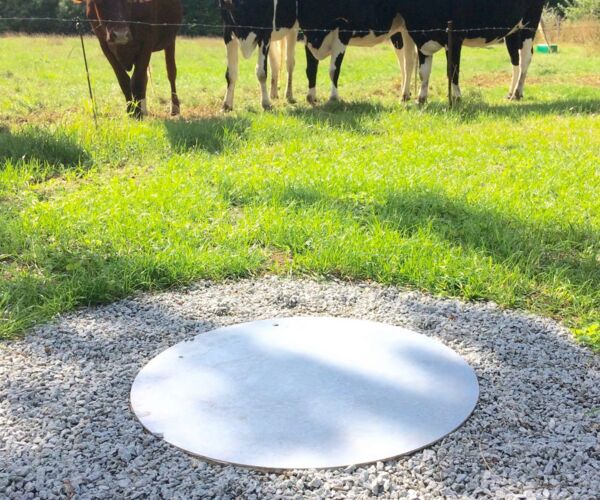
Die in eine Weide eingelassene Klanginstallation findest du gegenüber der Einfahrt zu Gut Krummbek (Schashagen, Dorfstraße 5). In ihrem Kunstwerk nimmt Maria Malmberg die Kreislaufwirtschaft auf dem Gut zum einen in der kreisrunden Edelstahlscheibe auf, die als Resonanzkörper für die darunter liegenden Speziallautsprecher dient. Zum anderen hat sie Weizen, Milch, Wasser, Abwasser, Substrat und Gülle aus dem Betriebskreislauf des Hofes mit einer kreisrunden Klangschale zum Klingen gebracht und mit speziellen Mikrofonen aufgenommen, während sie die Schale umkreist hat.
Standort: Gut Krummbek, Dorfstraße 5, 23730 Schashagen
„Mobile Home“
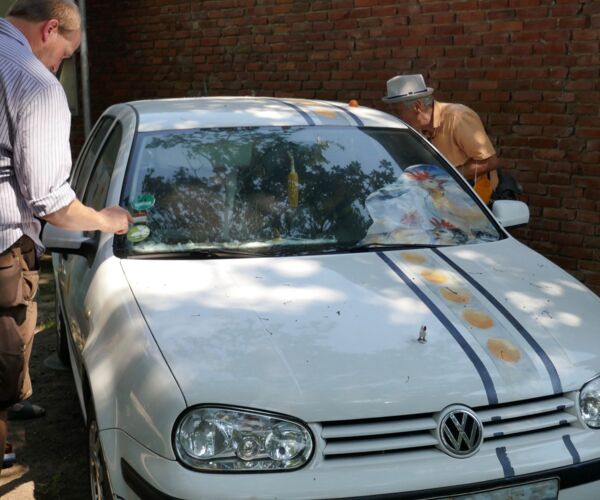
Der stillgelegte weiße VW Golf von Arno Neufeld hat seinen endgültigen Parkplatz direkt vor dem Geflügelhof Wulf an der Hauptstraße 14 in Groß Schlamin (Schashagen) gefunden.
„Hinter dieser Arbeit“, so der Künstler, „steht der etwas fabelhafte Ansatz, den Hühnern auf dem Hof einen modellhaften Ausflug anzubieten. Zu der Freilaufhaltung auf dem Gelände könnte sich ein Traum von Komfort und Luftveränderung gesellen. Da die Hühner selbst nicht unbedingt als die ganz überragenden Flieger bekannt sind, wird ein Auto bereitgestellt und entsprechend ausgestattet.“ Ein ganz besonderer Reiz: Bei Einbruch der Dämmerung geht im „Mobile Home“ ein sanftes Licht an.
Standort: Geflügelhof Wulf, Hauptstraße 14, 23730 Groß Schlamin
„Al Fresco“
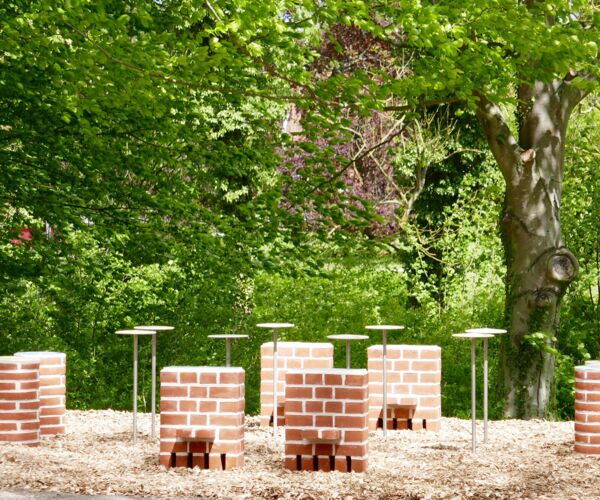
In direkter Nachbarschaft zum denkmalgeschützten Ensemble von Gut Petersdorf ist ein weiteres LANDKUNSTSTÜCK eröffnet worden. Die Installation „Al fresco“ ist eine gemeinsame Arbeit von Susanne Juliette Koch aus Osterby im Kreis Rendsburg-Eckernförde und Parul Modha aus Maribo auf der dänischen Insel Lolland.
Standort: Gut Petersdorf, Petersdorfer Allee 1, 23738 Lensahn
„Kipp-Punkte“
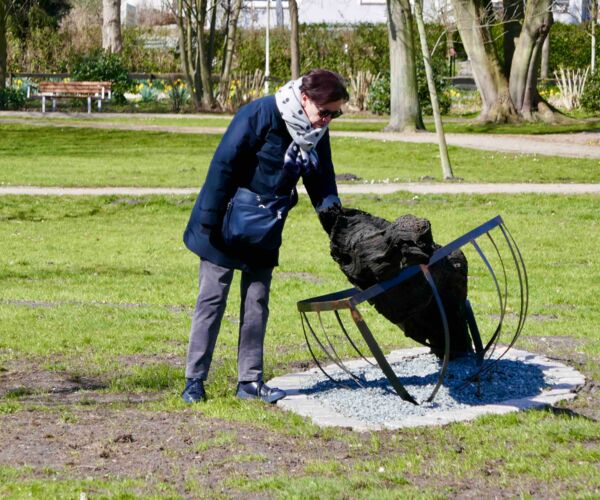
An der Ostseeküste in Dahme sind Klimawandel und Deichbau ein wichtiges Thema. Das LANDKUNSTSTÜCK „Kipp-Punkte“ - ein Bootsgerippe aus Metall samt Mooreiche - von Anka Landtau macht auf das Zusammenspiel deutlich. Ein abgestorbener Baum, umarmt von einem eisernen Skelett eines verwitterten Bootes, verweist auf die Schnittstelle der Küste und des Klimawandels: Auf der einen Seite steigt das Wasser, auf der anderen verdorren Wälder und Felder.
Standort: Kurpark Dahme, 23747 Dahme
„Vogeluhr“
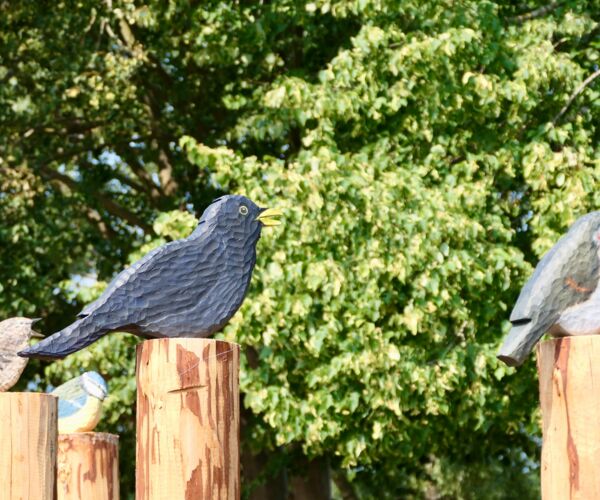
Direkt am 600 Hektar großen Kellenhusener Forst gelegen, sind die Themen Klimakrise, Baumsterben und Artenvielfalt ein wichtiges Thema. Das LANDKUNSTSTÜCK „Vogeluhr“ - ein aus Holz gefertigtes Projekt der 3. Klasse der Grundschule Grube in Zusammenarbeit mit der Bildhauerin Traute Ohlenbusch - lädt dazu ein, in der Natur ganz genau hinzuschauen und hinzuhören. Bei einem Besuch des Forstes in Begleitung des Försters lauschten die Schülerinnen und Schüler den Stimmen des Waldes und lernten, dass die Vogelgesänge uhrwerkartig 70 Minuten vor Sonnenaufgang einsetzen. In der entstandenen 80-minütigen "Vogeluhr" beginnt der Hausrotschwanz das frühe Morgenkonzert.
Standort: Waldstraße / Waldparkplatz, 23746 Kellenhusen
Kontakt zu den Projektpartnern
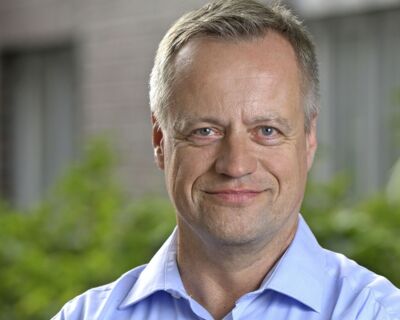
Ekkehard Briese Journalist in Hamburg. Er ist Vorsitzender von LANDKUNSTSTÜCK e.V. und kümmert sich u.a. um die Akquise von Förderern. Kontakt: info@landkunststück.de
Eike & Oke Steensen Landwirte, Flächengeber für die Installation „Balance“ & tatkräftige Unterstützer von LANDKUNSTSTÜCK.